


This guide lists what the documents and studies show about the steamboat Eliza Battle, in date order, with a source on every entry.
Listen to the episode: 50 States of Folklore - Alabama: The Phantom Steamboat of the South
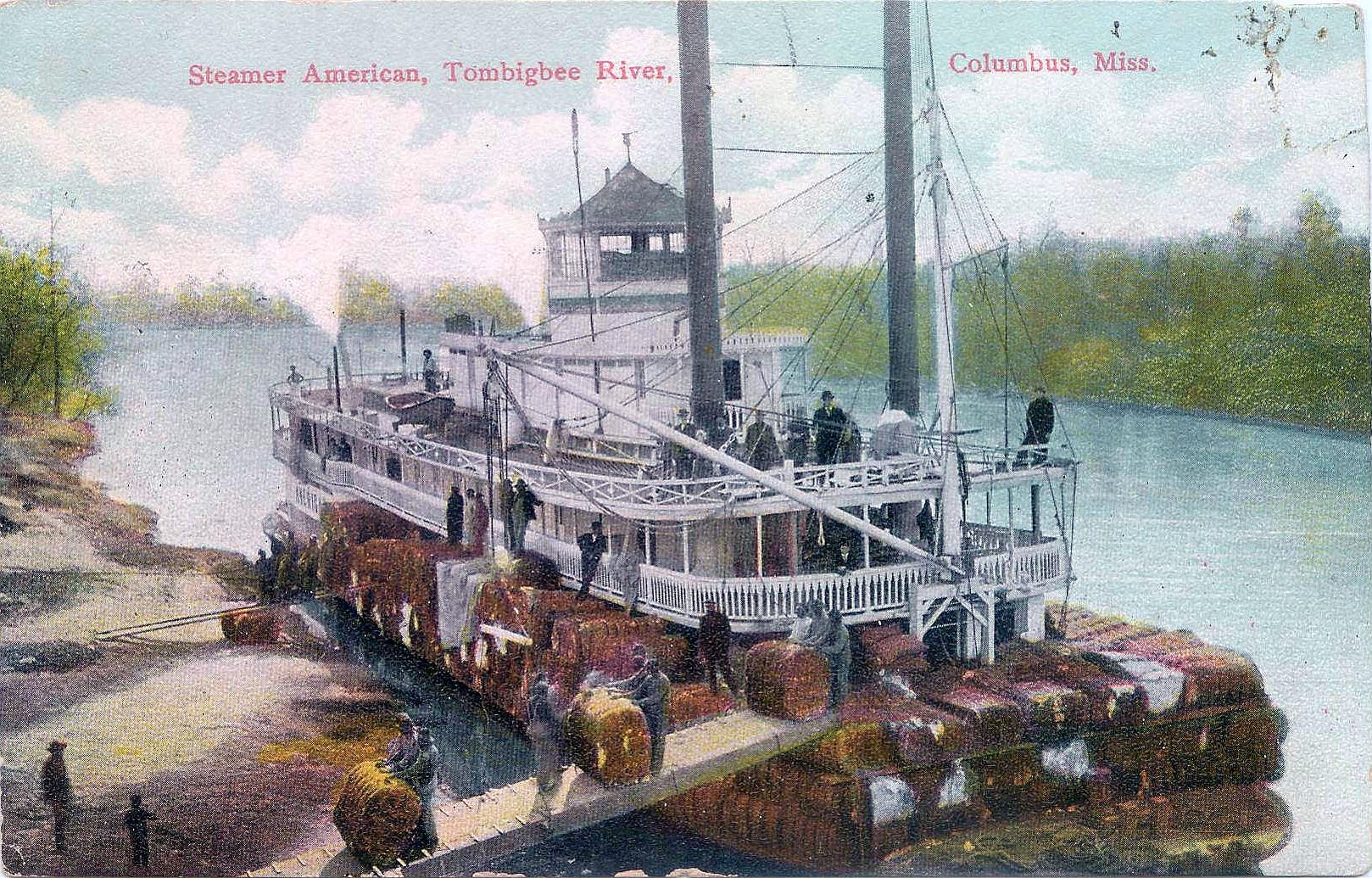
The steamer American loaded with cotton on the Tombigbee River at Columbus, Mississippi, in a postcard from about 1890 to 1920. A later boat, not the Eliza Battle. Public domain, via Wikimedia Commons.
At a glance
Date of the fire: About 2 a.m., Monday, March 1, 1858 [1] [6]
Place: The Tombigbee River near Kemp’s Landing, above present-day Pennington, Choctaw County, Alabama [1] [9]
Aboard: About 50 to 60 passengers and about 45 crew, roughly 100 people [1] [6] [9]
Deaths: Reported figures run from 29 to as many as 90. Ward writes that most accounts give 33. [1] [5] [10]
The folklore: A burning phantom steamboat, recorded by Kathryn Tucker Windham in 1969 [7] [8]
The boat, 1852 to 1858
1852. Built in Indiana. The Eliza Battle was a wooden side-wheel steamer of 316 tons, built at New Albany, Indiana. She ran between Columbus, Mississippi, and Mobile for the firm of Cox, Brainard and Company. [9]
April 7, 1854. A former president aboard. Millard Fillmore was received aboard at Mobile. [9]
The last trip, February 28 to March 1, 1858
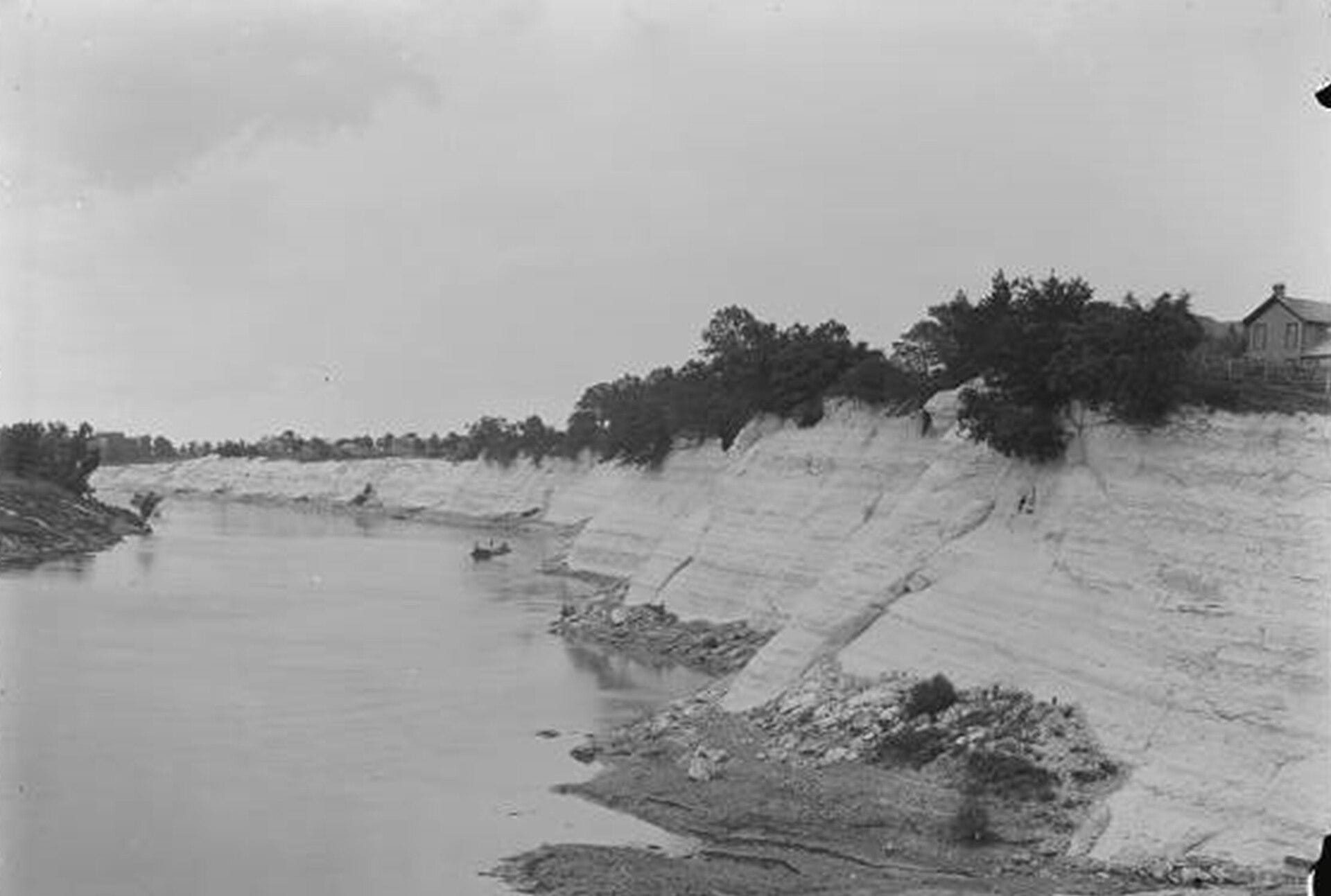
White Bluff at Demopolis, photographed by Eugene Allen Smith in 1903. A stop on the last trip. Public domain, via Wikimedia Commons.
February 28. Down the river. The boat left Columbus and called at landings including Pickensville, Fairfield, Warsaw, Gainesville and Demopolis. The historian Rufus Ward writes that after Demopolis she carried 55 to 60 passengers, a crew of about 45 and 1,400 bales of cotton. [5] [6] [10]
That night. The weather turns. Ward writes that the temperature fell 40 degrees within two hours, with sleet and ice on the boat. [5]
About 1 a.m. Passing the Warrior. The boat passed the steamer Warrior. The Mobile report said that no cause for the fire was known, “unless it was by sparks from the steamer Warrior,” met about half an hour before the flames were found. [1] [6]
About 2 a.m. Fire in the cotton. The Mobile account said the fire began among the cotton bales on the after deck under the cabin. A north wind, “almost a gale,” spread it through the boat, and passengers fled in their night clothes. [1] [3]
The landing that failed. The boat was headed for shore, but the river was high and out of its banks and the wheel ropes had burned. She was driven among the trees. Passengers clung to branches and to cotton bales thrown overboard. Flames cut off the yawl, and an attempt to launch the lifeboat failed. [1]
Until morning. The cold. Local residents brought boats and took survivors from the trees. The report said most of the dead had frozen after three or four hours in the cold. Ward writes that the steamer Magnolia arrived hours later. [1] [6]
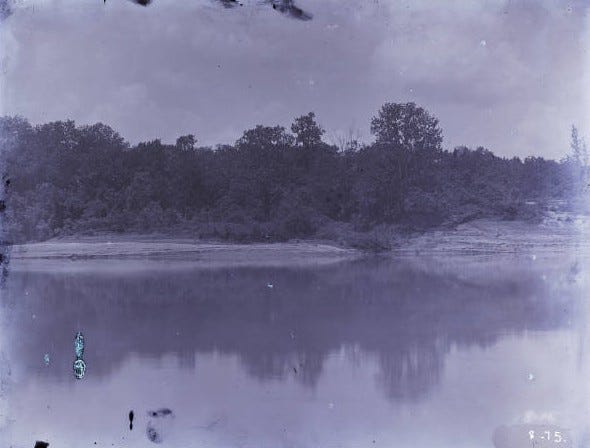
The Tombigbee River below Moscow Landing, photographed by Eugene Allen Smith on June 29, 1888. Encyclopedia of Alabama places the sinking near Moscow Landing. Public domain, via Wikimedia Commons.
The reports, March to October 1858
March 4. First telegraph news. The Nashville Patriot printed a dispatch from Mobile: the boat had burned at Kemp’s Landing on Monday morning, with 39 lives and 1,200 bales of cotton lost. It named Rev. Mr. Newman of Louisville among the dead and said, “Many were frozen in the water.” The New-York Daily Tribune also gave 39 that day. [2] [4]
March 11 and 12. The list of the dead, reprinted. Reprints of the Mobile reports carried a list of the people who died. It named passengers, the barkeeper, the cook and enslaved crew members, listed by first name beside the names of the people who held them. The list said Mrs. B. Cromwell and her child “died from cold, in her husband’s arms, in a tree.” [1] [3]
Aboard the Magnolia. The survivors meet. A meeting of Magnolia passengers and survivors named a committee of five, which found the officers “fully exculpated from all censure” and praised Captain S. G. Stone. The Mobile paper said Stone ordered women and children saved first and was the last taken off. The Mobile Advertiser printed the report on March 4, and the Tribune reprinted it on March 12. [1] [3]
October 25, 1858. The government count. The Steamboat Inspection Service report, printed in the Treasury Report on the Finances for 1858, gave 29 deaths. Ward writes that a report to Congress called for lifeboats to be kept “in such manner that they may be of ready access in case of accident.” [5] [10]
How the toll was counted
The numbers never settled. The Mobile account gave 33, about half passengers and half crew [1]. The Tribune’s headline on March 12 read “Forty Lives Lost,” over a text that said 33 [3]. A compilation lists 29 from the Steamboat Inspection Service, 39 in several papers, and 80 to 90 in a Birmingham News recollection of 1942 [10]. Ward, quoted there, wrote that the count “grew from the twenty-nine to thirty-four, forty, fifty and then to almost one hundred.” [10]
Ward also writes that F. S. Stone, the captain’s 19-year-old son and second clerk, swam back to the burning boat several times to bring women and children to safety. [6]
The phantom steamboat
1969. The book. Kathryn Tucker Windham, with Margaret Gillis Figh, published 13 Alabama Ghosts and Jeffrey. Encyclopedia of Alabama says the Eliza Battle story is featured in it. [7] [8]
The legend as told. Wikipedia’s summary of Windham’s chapter, “The Phantom Steamboat of the Tombigbee,” says the sightings come on cold, windy winter nights near the site, and that river-men take a sighting as a warning of disaster. Reported sightings run from just north of Pennington down to Nanafalia. [9]
February 12, 2026. On television. Alabama Public Television’s Jeffrey’s Southern Ghosts adapted the story. A Pennington resident recalled two gravestones marked “in memory of,” which his grandmother said were for young men killed in a 1950s barge explosion after reported sightings. These are recollections, not records. [11]
Theories and open questions
Sparks from the Warrior. Suggested in 1858 and favored by Ward. Never proven. [1] [5] [6]
The wreck. Wikipedia says the hull lies in about 28 feet of water. In the 2026 APT program, a sonar pass over the suspected site found something, and the narrator called the results “inconclusive.” No state archaeological report on the wreck was found for this guide. [9] [11]
Still unknown. The exact number who died, the full names of several of the dead, and what started the fire. [1] [10]
The places
Columbus, Mississippi. February 28, 1858. The last trip began here. [6]
Demopolis, Alabama. February 28, 1858. The last major stop. [9]
Beckley’s Landing. March 1, 1858. Wikipedia places the discovery of the fire near here, about 32 miles below Demopolis. [9]
Kemp’s Landing and Moscow Landing, Choctaw County. March 1, 1858. The boat burned out about half a mile to three quarters of a mile above Kemp’s Landing. Encyclopedia of Alabama names Moscow Landing as the place she sank. [1] [7]
Pennington, Alabama. Today. The town nearest the wreck, near the Alabama 114 bridge and the old Naheola Bridge. [7] [9] [11]
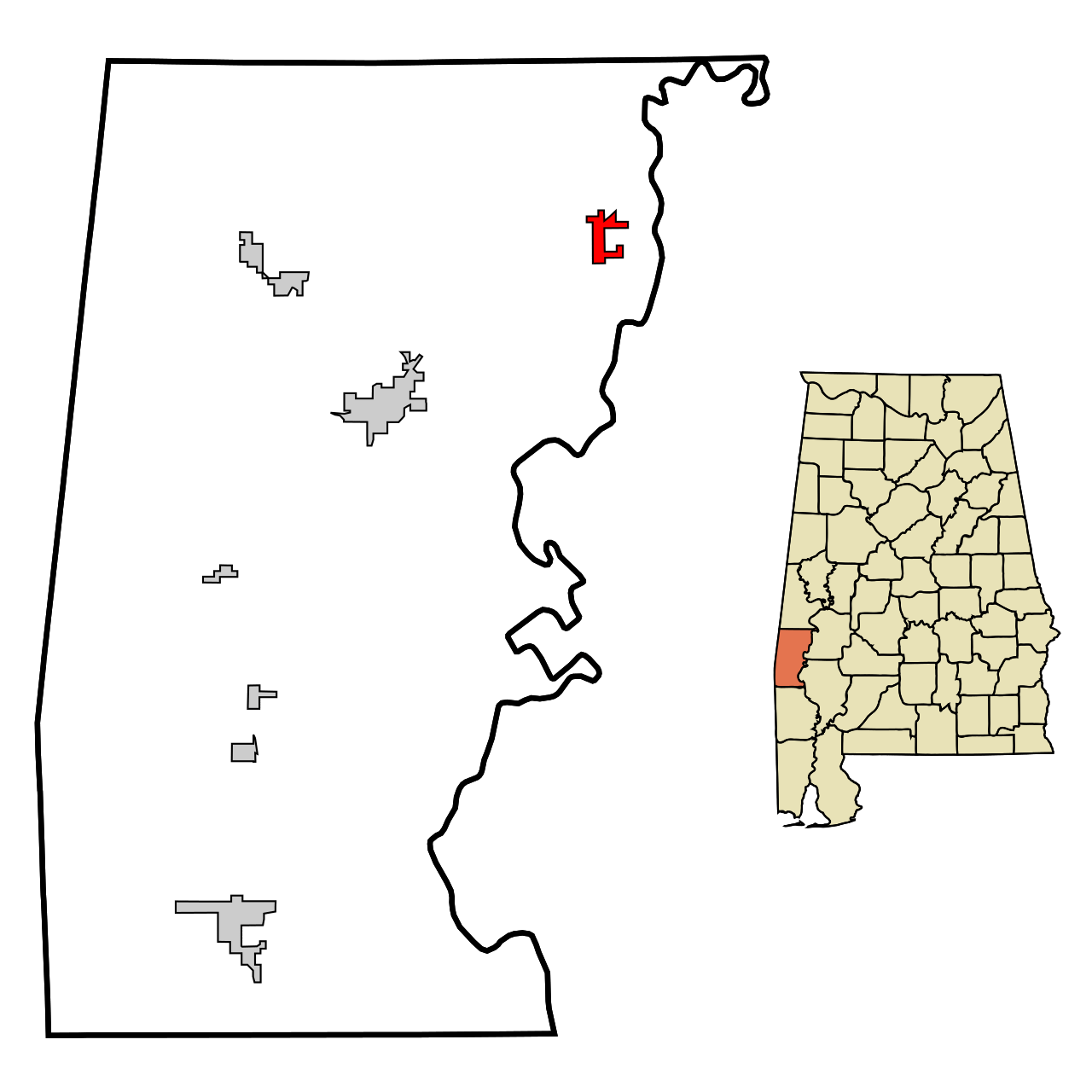
Pennington, highlighted, in Choctaw County, Alabama. Map by Arkyan, CC BY-SA 3.0, via Wikimedia Commons.
Questions
When did the Eliza Battle burn? At about 2 a.m. on Monday, March 1, 1858. Some accounts say February, when the trip began. [1] [6] [7]
How many people died? Sources give 29 to about 90. The government count was 29. The first telegraph reports gave 39, and Ward writes that most accounts give 33. [1] [2] [4] [5] [10]
What caused the fire? No one knows. The 1858 report suggested sparks from the steamer Warrior. [1]
Is the wreck still in the river? Wikipedia says the hull remains near Pennington. A 2026 sonar search was inconclusive. [9] [11]
Where does the ghost story come from? Its best-known telling is in Kathryn Tucker Windham’s 13 Alabama Ghosts and Jeffrey, 1969. It is folklore. [7] [8] [9]
Listen
The full story is in the episode: 50 States of Folklore - Alabama: The Phantom Steamboat of the South
Sources
The Prairie News (Okolona, Miss.), March 11, 1858, p. 2, “Terrible Disaster on the Bigbee! Burning of the Steamer Eliza Battle!” Reprints the Mobile account and the list of the lost from the Mobile Evening News. Library of Congress, Chronicling America. loc.gov
New-York Daily Tribune, March 4, 1858, p. 4, news summary. Library of Congress, Chronicling America. loc.gov
New-York Daily Tribune, March 12, 1858, p. 6, “Terrible Steamboat Disaster. Burning of the Eliza Battle. Forty Lives Lost.” From the Mobile Advertiser, March 4, with the survivors’ committee report. Library of Congress, Chronicling America. loc.gov
Nashville Patriot, March 4, 1858, p. 3, telegraph news from Mobile. Library of Congress, Chronicling America. loc.gov
Rufus Ward, “Ask Rufus: The tragic story of the Eliza Battle,” The Dispatch (Columbus, Miss.), March 10, 2012. cdispatch.com
Rufus Ward, “Ask Rufus: The Tombigbee disasters of March 1,” The Dispatch (Columbus, Miss.), February 24, 2018. cdispatch.com
Encyclopedia of Alabama, “Pennington.” encyclopediaofalabama.org
Encyclopedia of Alabama, “Kathryn Tucker Windham.” encyclopediaofalabama.org
Wikipedia, “Eliza Battle” (accessed Oct 27, 2026). en.wikipedia.org/wiki/Eliza_Battle
US Deadly Events, “1858 Mar 1, Steamer Eliza Battle fire,” death toll compilation with citations. usdeadlyevents.com
Alabama Public Television, Jeffrey’s Southern Ghosts, “The Phantom Steamboat of the Tombigbee,” February 12, 2026, transcript on PBS. pbs.org
Midnight Signals, “50 States of Folklore - Alabama: The Phantom Steamboat of the South,” April 29, 2025. midnightsignals.net
Image credits
Postcard of the steamer American on the Tombigbee River at Columbus, Mississippi, about 1890 to 1920. Unknown author. Public domain. Wikimedia Commons
White Bluff at Demopolis, 1903. Eugene Allen Smith. Public domain. Wikimedia Commons
Tombigbee River below Moscow Landing, June 29, 1888. Eugene Allen Smith. Public domain. Wikimedia Commons
Pennington highlighted in Choctaw County, Alabama. Map by Arkyan, CC BY-SA 3.0. Wikimedia Commons


