


Midnight Signals Case Files
Companion to Episode: Hexham Heads
When the BBC came to tell the story of the Hexham Heads, it couldn’t get hold of the heads. Other carvings appeared in their place. By then, the little pair had been passed between a family, a museum and people who hoped to work out what they were. They had attracted newspaper stories and accounts of something entering two homes. They were small enough to fit in a box. Finding that box, however, was already proving difficult.
Jenny Robson had wanted them brought back to Hexham. In May 1975, a newspaper reported that she planned to bury them in the garden where her sons had found them. There had been enough trouble since the discovery. While other people wanted another look at the faces, she was ready to put them under the soil again.
Her older son, Colin, had been clearing weeds beside a hedge on Rede Avenue in 1971 when he uncovered the first face. Leslie came down from the house to help and found the second. Their mother could hardly have expected a garden find to become part of the family’s life for years. At first, there were just two little objects to clean off and show the neighbours. They were different enough to acquire names: the boy and the girl, although the second face was also called the old woman or the hag.
Once they were indoors, the Robsons began finding them turned away from the positions in which they had been left. Nobody caught them moving. Other incidents were harder to overlook. Bottles broke, objects were thrown, and glass appeared where someone would later lie down to sleep. Next door, Nelly Dodd described a visitor that seemed partly human and partly sheep. When the heads were sent south to the scholar Anne Ross, she reported a dark, fur-covered figure leaving her bedroom and going down the stairs.
The episode follows those encounters and the people who handled the heads. Beyond it lies a longer history of heads carried home, kept for protection or buried with a purpose. There are also some smaller discoveries: what Colin still remembered about the garden, what Ross put into her first paper, and how her voice was found again after part of the television report went missing. The heads themselves have yet to make a verified reappearance in the records used here.
The paid companion continues with those accounts, the older head traditions, a chronology and an illustrated case file to download.
The garden Colin remembered
Colin was eleven when he found the first head. In the years that followed, other people would give the discovery an ancient setting, a supernatural explanation and a place in books about British mysteries. He could still remember holding the things. Asked in a short interview in 2017 whether they had felt hot, he said they were cold, if anything, but made his hands tingle.
He also remembered a small bush in the corner of the back garden, growing where the heads had been unearthed. At night, he said, it seemed to give off its own light. Another question concerned Sparky, the family’s budgie, whose death had sometimes been linked to the heads. Colin remembered burying the bird in the garden, but didn’t recall the family blaming the heads for its death.
The early household accounts have that same closeness to ordinary life. Jenny recalled a noise behind the television like the crack of a whip. Pieces from around a mirror turned up in a frying pan. One of her daughters had glass scattered over her mattress. The heads’ movements were noticed afterward, when someone returned to look at them. The breakages intruded while the family was using the house.
Nelly Dodd had gone into her children’s bedroom because her daughter was ill. Her son Brian remembered going downstairs to check on the howling dog and finding the front door open. Back in bed, something pulled his hair hard enough to lift his head from the pillow. He didn’t see it. His mother did, and screamed. Her husband rushed to the room without encountering the figure she said had touched her legs and then left on all fours.
Brian and Nelly had different parts of that night to describe. He remembered the pull on his hair; she remembered the shape beside the bed. Her children said she never withdrew her account. Jenny heard the crash and screams from her own house, and learned the following morning what Nelly believed had been in the room. The two little faces were still close by.
The kind of stone Hexham kept
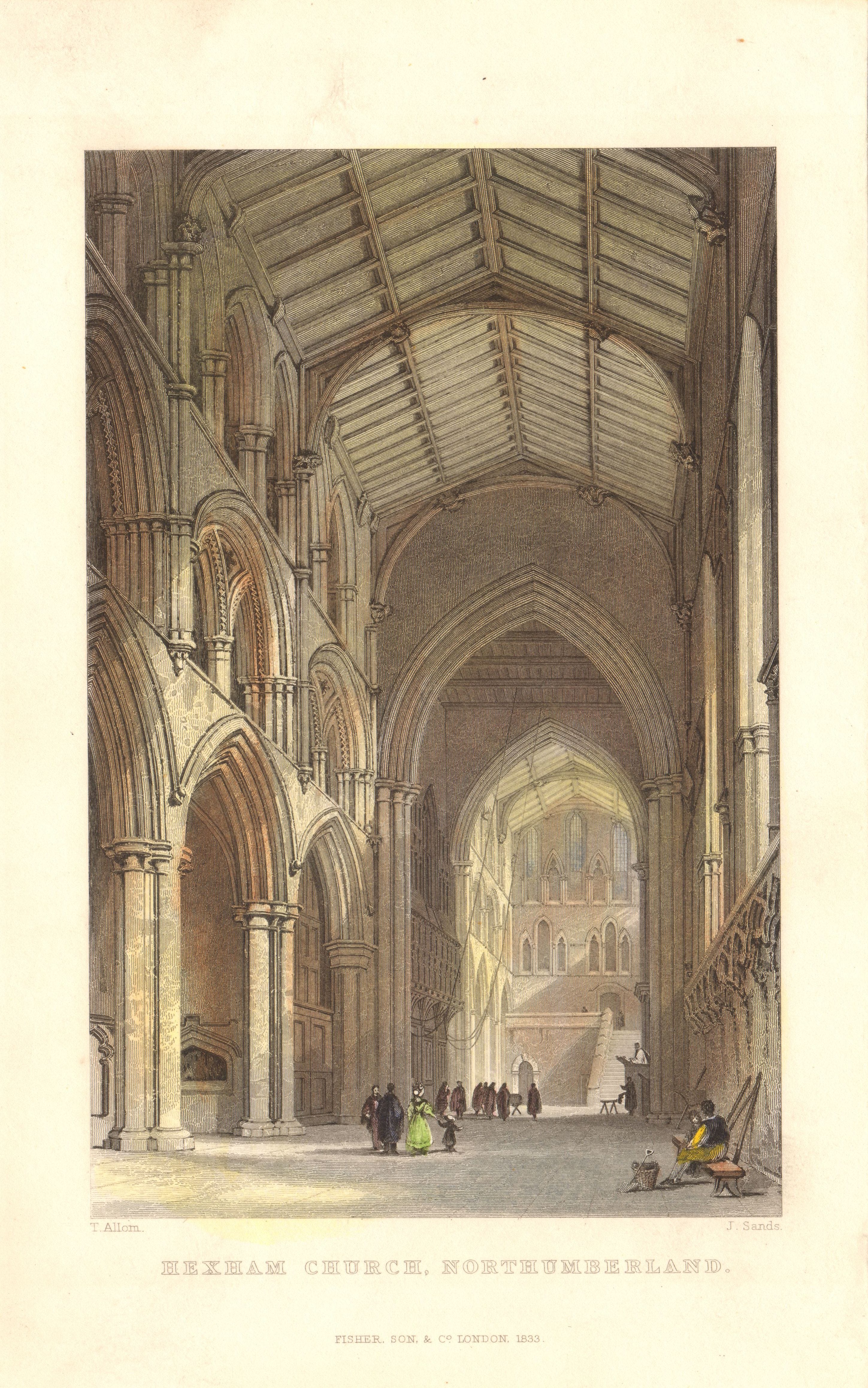
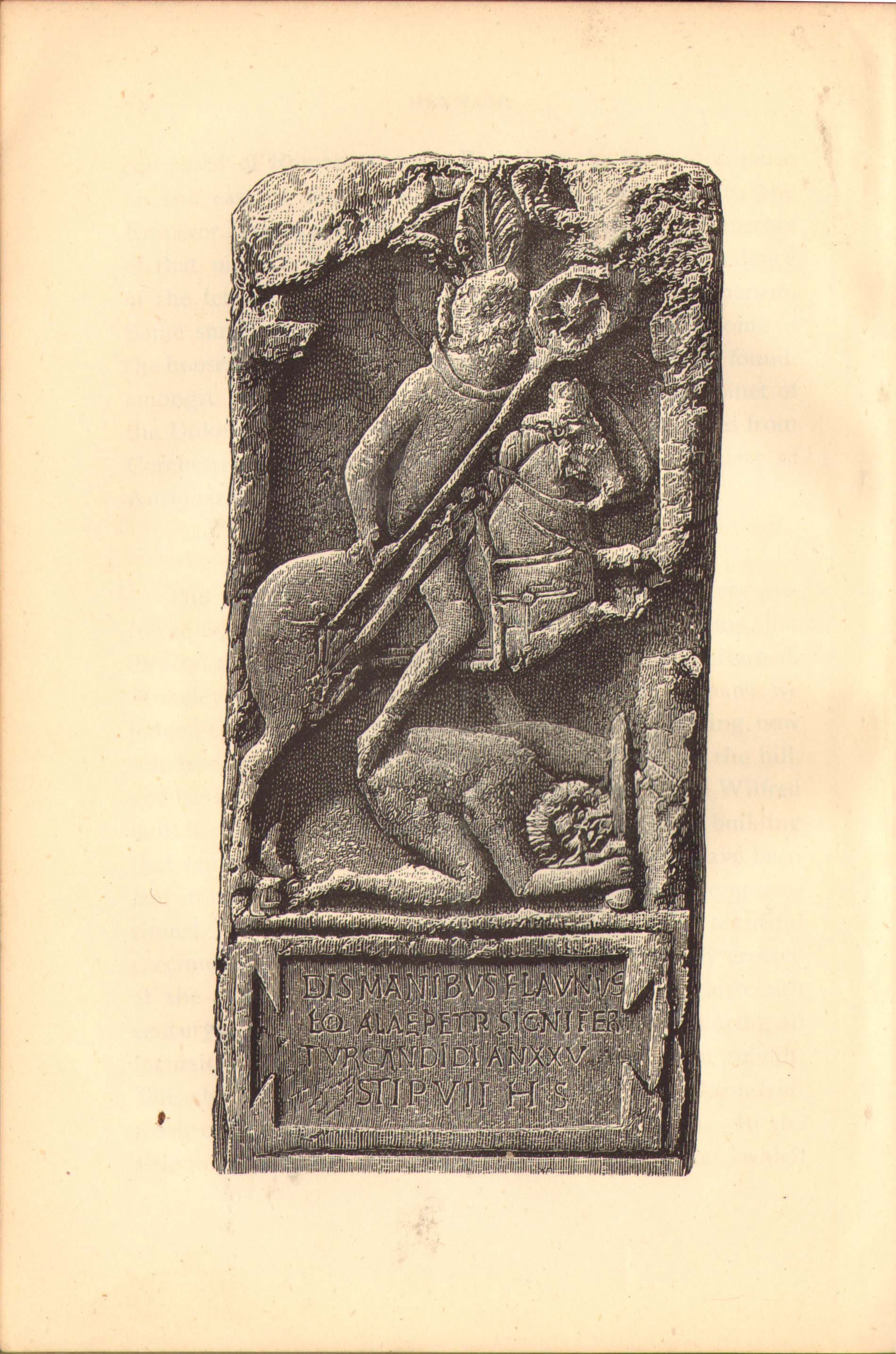
The abbey was a reasonable place to take an unfamiliar piece of carved stone. It already held a much larger find, the memorial of a Roman cavalryman called Flavinus. Discovered in the building’s foundations in 1881, the stone shows a rider above a defeated figure. Beneath them, an inscription preserves the soldier’s name, his age of twenty-five and his seven years of service. He had been a standard-bearer in the cavalry regiment Petriana.
Old stone had been reused at Hexham for centuries. A find in a garden near Hadrian’s Wall was worth showing to someone who might recognise it. The heads eventually reached the Museum of Antiquities in Newcastle, whose staff contacted Anne Ross. She had spent years studying the place of the human head in Celtic religion and folklore. Small, roughly worked faces were familiar territory for her, even when their original purpose was difficult to recover.
In her 1973 paper, Ross placed the Hexham pair alongside other heads found in the region. She described their hair and the short necks beneath them, suggesting that the necks might once have fitted into sockets. She wanted fieldwork before settling their date. A drawing showed the two faces together. Elsewhere in the paper were heads from Ovingham and Prudhoe, part of the wider group she was trying to understand.
Without the later stories, the Hexham entry would be easy to pass over. Ross had been sent two objects that seemed to belong to something she already knew. A shrine beneath the garden was one possibility she considered. If the heads had once stood in a deliberate position, carrying them into a house could have removed them from the place they were intended to protect.
Keeping a head close
The traditions behind Ross’s interest could be violent. Strabo described warriors in Gaul bringing their enemies’ heads home and fastening them at the entrances to their houses. Particularly prized heads were preserved in cedar oil and shown to visitors. Some owners, he wrote, refused to part with them even when offered a large payment. The visitor arrived at a home where the dead were still on display.
Strabo was writing from outside those communities and drawing on earlier accounts, including that of Poseidonius. His description has nevertheless acquired an unsettling companion in the ground. At Le Cailar in southern France, researchers examining fragments of human skull found traces consistent with treatment using conifer resin. The remains came from an Iron Age settlement. Someone had taken steps to preserve heads there, leaving material that could be detected more than two thousand years later.
A carved head could survive through a very different history. The Corleck Head, from County Cavan in Ireland, has three faces arranged around a single rounded stone. Each has large eyes and a narrow mouth. The faces are similar without being identical, and one mouth has a small hole. The photograph below shows only one of them. Another face waits around either side.
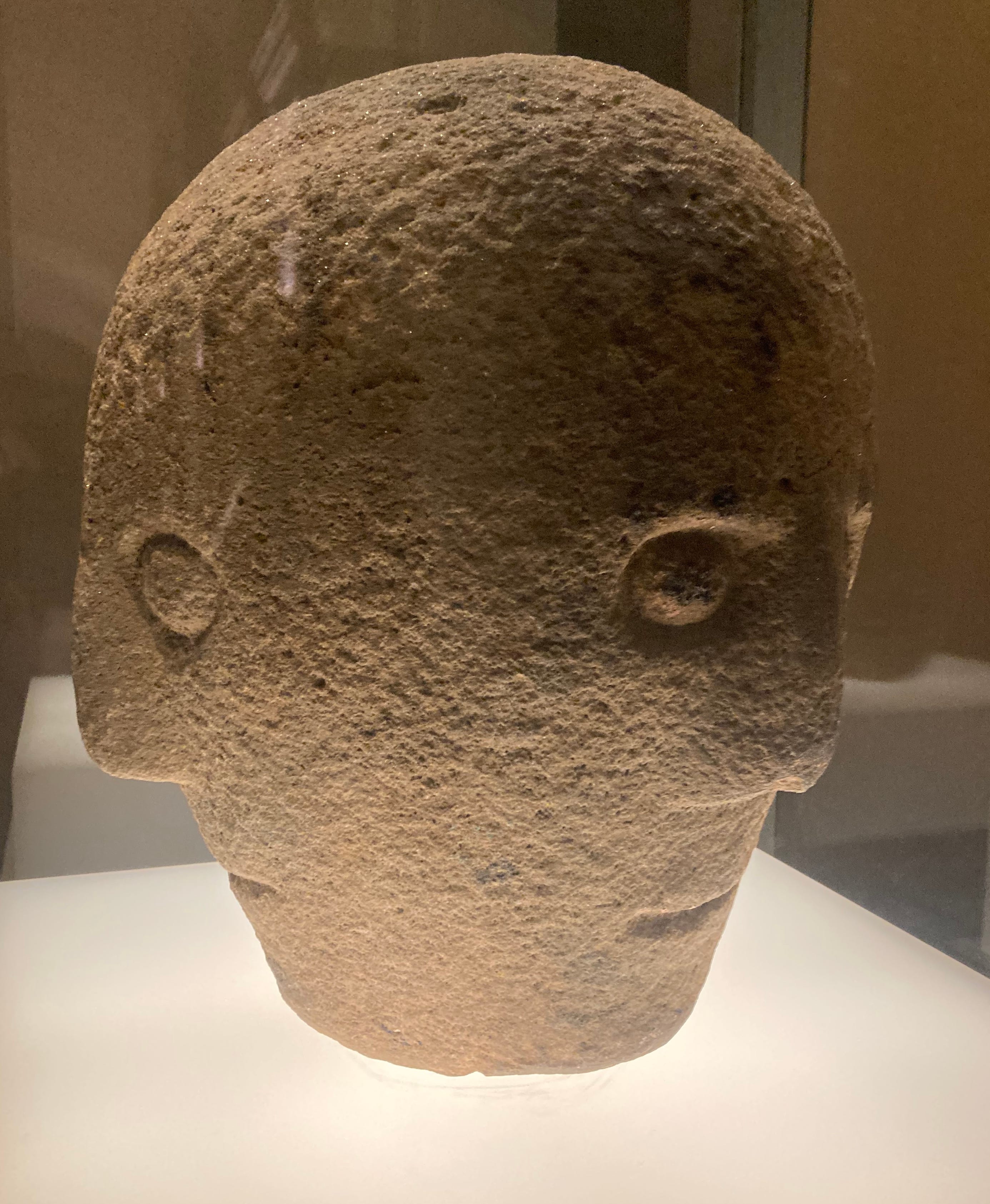
The stone has been read as the image of a deity looking in several directions, although no particular identity has been settled. Its maker carried the faces all the way around. It has no plain back that could be turned toward a wall, leaving a single face looking out into a room.
Ross’s work brought carved faces into the same discussion as heads taken in battle and heads remembered in folklore. Some guarded places or kept harm away. In the Welsh stories, one continued to sit among its companions long after the man to whom it belonged had died.
Seven years at Harlech
Brân was dying in Ireland when he told his surviving companions what to do with his head. They were to cut it off and carry it back to Britain. There would be a long stay at Harlech, then another at Gwales, before they took it to London and buried it at the White Mount, facing France. He even warned them about a door they must leave closed along the way.
In Lady Charlotte Guest’s translation of the tale, the companions spend seven years at Harlech. The birds of Rhiannon sing to them, and Brân’s head keeps them company. They have come through a disastrous expedition, but their grief is held at a distance. They can remain together with the head as though their king were still among them.
At Gwales, they enter a hall overlooking the sea. Two of its doors are open; the third is shut. For eighty years they stay there, forgetting their losses and scarcely noticing the passage of time. Then Heilyn decides to open the forbidden door. The memory of what happened in Ireland returns. Their long stay is over, and they leave to finish the journey Brân asked of them.
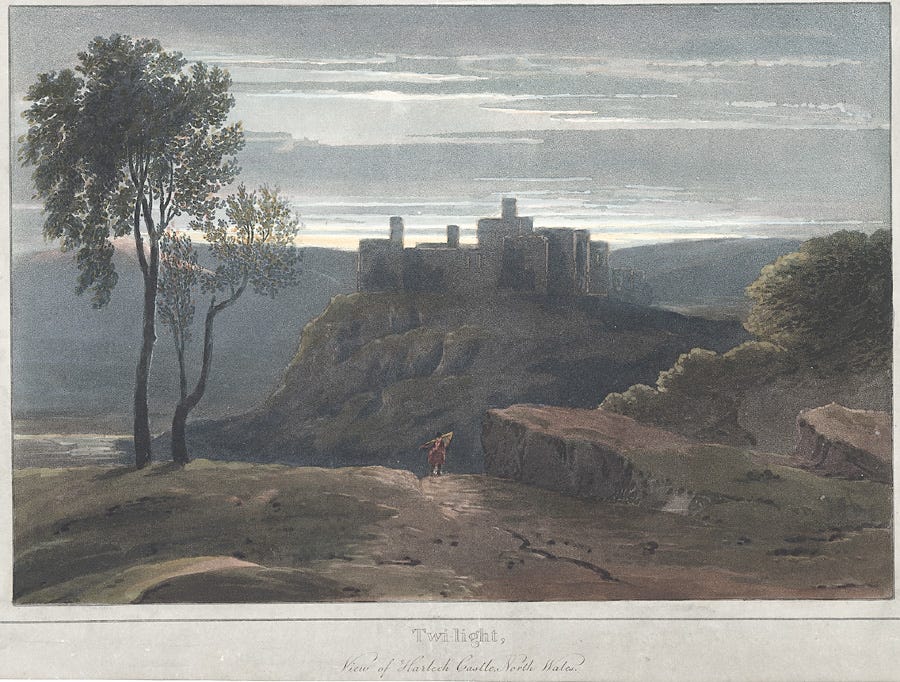
The head is buried at the White Mount. While it remains there, the story says, Britain is safe from invasion across the sea. Its removal ends that protection. The companions have carried their king home, eaten and listened to music in his presence, and finally placed him where he can guard the country. Their instructions concern the handling of a head from beginning to end.
This was part of the older world Ross brought to the Hexham discovery. Heads could have responsibilities. They could belong at an entrance, beside water or beneath the earth. The Robsons knew none of the history of their own pair when they carried them inside. Ross hoped to supply it. Later, even after she changed her mind about their age, she continued to connect the heads with what had happened in her house.
The figure on the stairs
Ross had left the pair in their box in her study. She disliked them, though she later said there was nothing especially unpleasant about their appearance. She meant to have the material examined and send them back. Within a few nights, she woke cold and frightened and saw a tall, dark figure against her bedroom doorway. Its upper part reminded her of a wolf. Below that, it was shaped like a man.
As it moved away, she followed. She could hear it going down the stairs and saw it farther along the passage toward the kitchen. Only at the bottom of the staircase did she become too frightened to continue. She went back to wake her husband, the archaeologist Richard Feachem. He searched the house and found no intruder. They discussed whether she had been dreaming and decided to keep the incident from their children.
When their daughter Berenice came home from school a few days later, her parents were in London. She let herself in and saw a dark figure on the stairs. It rushed down, vaulted the banisters and landed heavily, with a soft sound like padded feet. She followed it along the corridor until it disappeared. By the time her parents returned, she was pale and shaken, struggling to explain what had happened.
Anne told that story on television in 1976. Her description keeps coming back to the movement through the house. She had gone after the visitor despite being frightened of it, and her daughter had done the same. In each account, they followed it farther than they wanted to go. Neither could explain the impulse afterward.
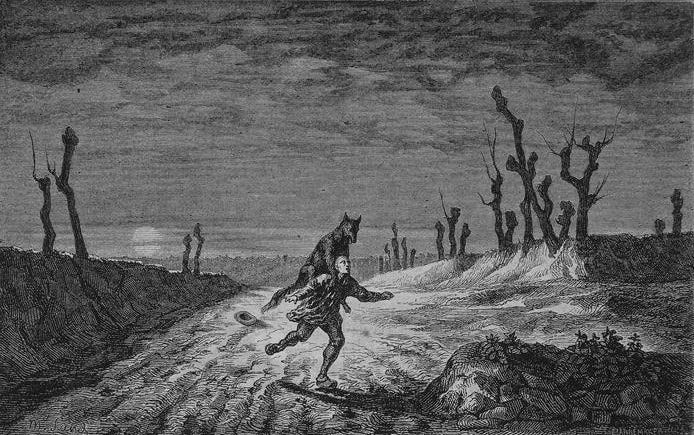
There were other disturbances around the stairs. Ross described soft impacts, a door opening abruptly and a dark shape glimpsed ahead of her and Berenice as they came down together. Her husband never saw it. He could search a room that felt occupied to the others and find nothing there. Eventually, Ross heard about Nelly Dodd’s encounter and began to connect the two homes through the objects that had travelled between them.
Sending the Hexham pair away did not immediately bring relief. Ross said the presence remained, and later described the change after she removed her wider collection of heads. Her husband noticed it too, although he had never seen the figure. The family could live in the house without waiting for the next sound from the staircase.
The man who said he made them
Desmond Craigie remembered the heads as something he had made for his daughter Nancy. He had lived in the Robsons’ house before them and worked with artificial stone. Around 1956, he said, he fashioned three small heads to show Nancy the material he used. She played with them as dolls. One broke, and the others were left in the garden.
He made more examples when the discovery became news. By then, his account had to compete with stories of ancient worship and a creature appearing in people’s bedrooms. Paul Screeton’s early investigation describes Craigie’s insistence that the heads were his work, along with the attention and jokes the affair brought him. He had recognised something he believed he knew how to make.
The examinations of the material gave different answers. Frank Hodson at Southampton initially identified natural sandstone. A Newcastle report by D. A. Robson, dated 8 May 1974, described artificial cement after examining thin sections and comparing the heads with material supplied by Craigie. Ross eventually accepted that the heads were modern. She continued to stand by her account of the visitor.
There were further heads to keep track of. Before the garden discovery, Colin had made a clay face for a school art project. He later gave it to Screeton. Photographs showed that piece beside a demonstration head made by Craigie, and the two were sometimes mistaken for the original finds. The substitutes in the BBC report added another set of faces. An unfamiliar photograph of the Hexham Heads could therefore show objects made by people involved in the story without showing either of the heads the boys found.
Ross’s published drawing is useful here. It preserves the original pair together, including their different hairlines and the necks that interested her. Those features would matter if the heads turned up again among somebody’s belongings. They were never large objects, and by the end of the 1970s they were being passed between private homes.
Left in a box
Don Robins described taking possession of the pair in 1977. A chemist interested in whether stone could retain and release an experience, he wanted to examine them even if they were modern. He took them home in a cardboard box and kept them for months, often in his garden shed. The creature he hoped to investigate never appeared.
He did report an increasing discomfort around the head called the hag. Attempts to photograph the pair produced blurred or overexposed images, according to his account. Other people wanted to examine them, and eventually he agreed to let Frank Hyde carry out some experiments. In February 1978, Robins took the box to him in London.
Hyde used dowsing rods and a pendulum. During the visit, he put copper wire around the heads and said it reduced the response he was detecting. Robins left the objects with him, expecting to collect them again. When he later wrote and telephoned, he received no answer. An acquaintance said Hyde had been injured in a car accident. As time passed, Robins lost contact with him.
Screeton eventually traced Hyde’s later history and contacted his family after his death, but the search did not recover the heads. Some of the earlier transfers were unclear too. Museum correspondence had placed them back in Hexham, while Robins described obtaining them in Southampton. Somewhere between those accounts, someone had collected the pair and taken them south again.
Anne’s voice returns
Part of the BBC record was recovered in 2024. Producer Greg McKevitt had found the film of the 1976 Nationwide report, but it was silent. An old Fortean Times transcript gave him phrases to search in the archive. Part of the missing soundtrack turned up after an unrelated programme called Under Bow Bells.
The recovered sound covered the second half of the report. McKevitt recorded replacement narration for the missing opening, using the transcription. BBC Archive released the reconstructed version on 31 October 2024. Anne Ross could be heard describing the figure again, nearly half a century after the original broadcast.
The small box has had no such recovery in the accounts gathered here. Robins left it with a man who wanted time for an experiment. Jenny had wanted the heads returned to her garden. Both expected to see them again. Somewhere after the last reported handover, the people who knew what was inside lost sight of where it had gone.

The heads’ journey
The early dates come from published accounts and correspondence. Later movements depend largely on the recollections of the people who handled the heads.
Around 1956
Desmond Craigie said he made three small heads for his daughter Nancy. Two were eventually left in the garden.
Craigie’s account of their manufacture.
1971
Colin and Leslie Robson found the pair beside a hedge in their garden on Rede Avenue, Hexham.
Ross’s 1973 paper gives 1971; many later retellings use 1972.
3 March 1972
Newcastle newspapers reported the discovery and Ross’s interest in the heads.
The early coverage helped carry the story beyond Hexham.
1973
Ross published “Some New Thoughts on Old Heads,” including a description and drawing of the pair.
She asked for fieldwork before a firm date was assigned.
8 May 1974
D. A. Robson’s report identified artificial cement in the heads.
This differed from Hodson’s earlier identification as sandstone.
1 May 1975
A newspaper reported Jenny Robson’s intention to rebury the heads when they were returned.
The report records her plan, not a completed burial.
20 February 1976
The BBC broadcast the Nationwide report with Ross’s account of the visitor.
Other carved heads stood in for the original pair.
1977
Robins described receiving the heads for investigation.
His later account supplies this part of the story.
February 1978
Robins described leaving them with Frank Hyde in London.
Their subsequent whereabouts remain unresolved in the sources used here.
2017
Colin answered questions about the garden, Sparky and holding the heads.
A short interview looking back on his childhood.
31 October 2024
BBC Archive released the reconstructed Nationwide report.
The second half includes recovered sound; the opening uses replacement narration.
Sources and image credits
Reading and watching
The original faces. Anne Ross’s “Some New Thoughts on Old Heads”, Archaeologia Aeliana, fifth series, volume 1 (1973), pp. 1-10. The Hexham entry and Figure 5 show what Ross was examining before the case became widely known. The appendix contains Hodson’s initial material report.
The early investigation. Paul Screeton’s Tales of the Hexham Heads (1981) brings together family accounts, reporting and the argument over who made the heads. The scan is imperfect, but preserves material close to the original events.
Colin’s garden. The 2017 interview with Colin Robson is short enough to read in a few minutes. It covers the budgie, the glowing bush and the feel of the heads in his hands.
Anne Ross on television. BBC Archive’s reconstructed report restores the surviving 1976 film. Part of the original sound is missing. Doris V. Sutherland provides a transcription of Ross’s surviving account, which was used here for the television passage.
Recovering the sound. Bob Fischer’s interview with Greg McKevitt, published online in May 2025 after appearing in Fortean Times 453, tells how the missing audio was found.
Tests and later movements. Kenneth Brophy’s “Tested and contested” reproduces examination material and discusses the heads’ custody. Brophy’s interpretation is skeptical; the underlying records are useful alongside Screeton’s account.
The older head traditions
Flavinus. Roman Inscriptions of Britain, RIB 1172 gives the inscription, translation and discovery details for the cavalryman’s memorial.
Heads brought home from battle. Strabo’s Geography, Book IV, chapter 4, describes heads displayed at houses and preserved for their owners. Strabo draws on earlier writers and describes the communities from outside them.
The remains at Le Cailar. Ghezal and colleagues, “Embalmed heads of the Celtic Iron Age in the south of France”, Journal of Archaeological Science 101 (2019), pp. 181-188, published online in 2018. The study examines traces of treatment on human skull fragments. Access to the repository copy may require sign-in.
The Corleck Head. An overview of the carving and its scholarship, with references for further reading. The identity of the figure represented by its three faces remains open to interpretation.
Brân and his companions. “Branwen the Daughter of Llyr,” in Lady Charlotte Guest’s Mabinogion. The full tale gives the journeys to Harlech, Gwales and London, including the forbidden door and burial of the head. This section of the companion retells the Welsh story as folklore.
An older study of the traditions. J. A. MacCulloch’s The Religion of the Ancient Celts (1911) discusses protective heads and their place in early interpretations of Celtic religion. Its age matters when reading its broader conclusions.
Image credits
1. Hexham Abbey interior, 1833. J. Sands after Thomas Allom. Image record and public-domain basis. The collection identifies the engraving as public domain in its source country and the United States.

2. Flavinus memorial, 1885. Illustration published in John Collingwood Bruce’s The Hand-Book to the Roman Wall, third edition. Image record and public-domain basis.

3. Corleck Head, 2022. Photograph by Ceoil at the National Museum of Ireland. Image record and CC0 dedication. The photographer released the image under CC0.

4. Harlech at twilight, 1813. David Cox and Richard Reeve are credited in the collection record, which identifies the print as public domain.

5. “Le Loup-Garou,” 1857. Illustration after Maurice Sand. Image record and public-domain basis.

These images show related places, a separate ancient carving and older folklore art. None depicts the original Hexham pair or a reported encounter. The twentieth-century drawings and television footage are linked for consultation rather than reproduced in the image package.