50 States of Folklore - Florida: Robert The Doll
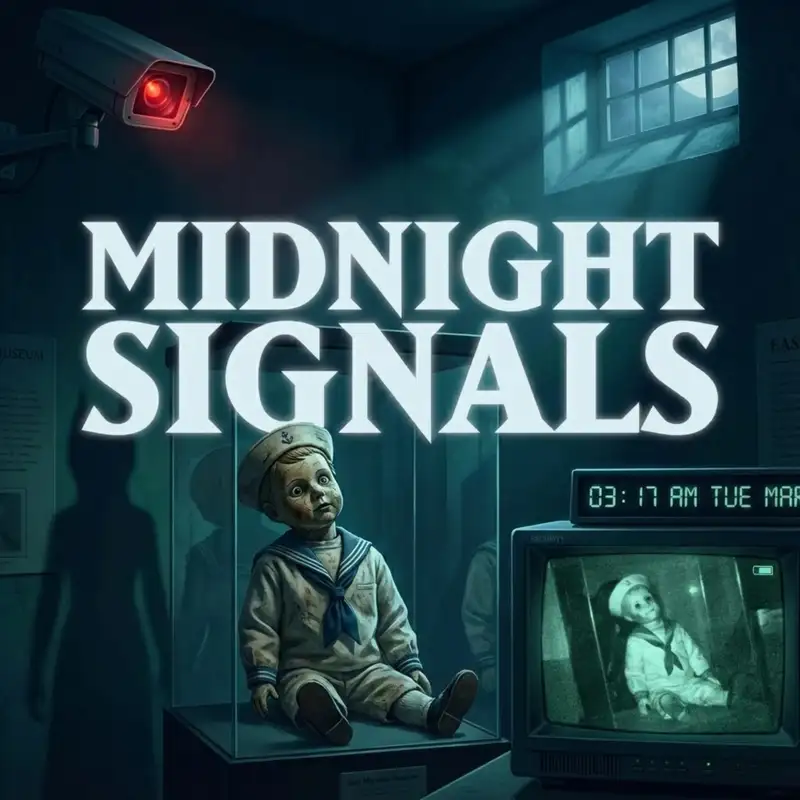
At 03:17AM on a Tuesday night in March, security cameras at the East Martello Museum in Key West captured something that shouldn't have been possible. The footage shows Robert the Doll, sitting motionless in his glass case for hours, suddenly turning his head toward the camera. The movement was subtle but unmistakable. By morning, three staff members had called in sick. This wasn't the first time Robert had made his presence known.
Speaker 1:For over a century, this three foot tall, sailor suited doll has terrorized anyone who dares to disrespect him. Today, the museum receives hundreds of apology letters each year from visitors around the world, all begging Robert to lift his curse. Their stories share disturbing similarities broken cameras, car accidents, sudden illnesses, financial ruin, and inexplicable misfortune that begins the moment they photograph him without permission. But Robert's reign of terror didn't begin in a museum. It started in nineteen o six, in a Grand Key West mansion, when a six year old boy received what seemed like an innocent gift.
Speaker 1:The woman who created Robert knew exactly what she was doing. She wove something dark into his fabric, something that would bind him to this world long after she disappeared. What she left behind was more than a doll. She left behind a curse that refuses to die. Robert Eugene Otto was born into privilege in 1900, the son of a wealthy Key West family whose fortune came from shipping and real estate.
Speaker 1:The Otto Mansion on Eaton Street stood as a testament to their success, its Victorian architecture and sprawling grounds marking them as one of the island's most prominent families. Like many wealthy households of the era, the Otto's employed several Bahamian servants, women who had traveled from the nearby islands seeking work in the prosperous American territory. Among these servants was a woman whose name has been lost to history, but whose legacy lives on in the supernatural terror she created. Historical accounts describe her as skilled in the traditional practices of her homeland, including knowledge of Obea, a form of folk magic and spiritual practice common throughout The Caribbean. The exact nature of her relationship with the Otto family remains unclear, but local folklore suggests she was mistreated by her employers, subjected to the casual cruelty that wealthy families often inflicted upon their domestic staff.
Speaker 1:In 1906, when young Robert Eugene Otto turned six years old, this servant presented him with what appeared to be a generous farewell gift. She had crafted the doll herself, using materials that told a disturbing story. The doll stood three feet tall, dressed in a white sailor suit that had once belonged to Robert himself. Its face was painted with an unsettling expression, neither fully smiling nor frowning, but caught in an ambiguous state that seemed to shift depending on the viewer's angle. Most disturbing of all, the servant had woven some of Robert's own hair into the doll's scalp, creating a physical connection between boy and creation.
Speaker 1:The servant's departure from the Otto household was as mysterious as her gift. Some accounts suggest she left voluntarily after presenting the doll, while others claim she was dismissed by the family. What remains consistent across all versions is that she vanished from Key West entirely, leaving no trace of where she went or what became of her. The only evidence of her time with the Otto's was the doll she left behind, and the strange occurrences that began almost immediately. Young Robert was delighted with his new companion, whom he named after himself.
Speaker 1:He carried the doll everywhere, speaking to it in hushed tones and treating it as his closest confidant. His parents initially found this behavior charming, the natural attachment of a child to a beloved toy. But their amusement quickly turned to concern when Robert began claiming that the doll spoke back to him. Late at night, the auto parents would hear two distinct voices coming from their son's room. One was clearly Robert's high pitched child's voice, but the other was different, deeper and more mature, speaking in tones that seemed impossible for a six year old to produce.
Speaker 1:When they investigated, they would find Robert sitting with his doll, insisting that his namesake had been telling him stories about faraway places and people he had never met. The neighbors began to notice something strange as well. When the Otto family was away from home, residents of the surrounding houses reported seeing the doll silhouette moving from window to window throughout the empty mansion, as if it were exploring the rooms on its own. The first sign that something was deeply wrong came on a humid August morning in 1907. Robert's mother, Elizabeth Otto, discovered the boy's room in complete disarray.
Speaker 1:Furniture had been overturned, books scattered across the floor, and his collection of toy soldiers arranged in what appeared to be battle formations. When she confronted her son about the destruction, six year old Robert looked up at her with wide, innocent eyes and spoke the words that would haunt the Otto household for decades to come. Robert did it. At first, Elizabeth assumed her son was simply refusing to take responsibility for his mischief, referring to himself in the third person as many young children do. But when she pressed him further, young Robert pointed directly at the doll sitting in the corner of his room and repeated with absolute conviction, Robert did it.
Speaker 1:He gets angry when people don't listen to him. The incidents escalated with alarming frequency. Kitchen utensils would be found arranged in strange patterns on the dining room table. Family photographs would be discovered turned face down in their frames. The household's prized china would crash to the floor in the middle of the night, despite being secured in locked cabinets.
Speaker 1:Each time, young Robert would offer the same explanation. The doll was responsible. The Otto family's domestic staff began to whisper among themselves about the strange atmosphere that had settled over the mansion. Maria Santos, the family's longtime housekeeper, later told her daughter that she could feel the doll's glass eyes following her as she moved through the rooms. She described an oppressive sensation, as if the air itself had grown thick and watchful whenever the doll was present.
Speaker 1:Other servants reported hearing the sound of small footsteps in empty hallways and the creak of floorboards in unoccupied rooms. The breaking point came when the family's cook, a woman who had worked for the Ottos for over a decade, abruptly quit her position without explanation. She was found the next morning standing at the end of the driveway, her belongings packed in a single suitcase, staring back at the house with a look of absolute terror. When Elizabeth Otto approached her to ask what had happened, the woman simply shook her head and walked away, never to return to the Otto household. Word of the strange occurrences began to spread throughout Key West's tight knit community.
Speaker 1:Family friends who had once been regular visitors to the Otto Mansion started declining invitations to dinner parties and social gatherings. Those who did brave a visit reported feeling an overwhelming sense of unease, particularly when in the presence of young Robert and his doll. Children who came to play with Robert would leave in tears, claiming that the doll had whispered threats to them when the adults weren't looking. Doctor. Samuel Mitchell, the family physician, documented his concerns about Robert's increasingly erratic behavior in his private notes.
Speaker 1:The boy had begun speaking in voices that didn't sound like his own, using vocabulary and expressions far beyond his years. During one particularly disturbing visit, Doctor. Mitchell observed Robert having an animated conversation with the doll, complete with pauses as if listening to responses that only he could hear. When the doctor attempted to examine the doll, Robert became violent, screaming that no one was allowed to touch his friend without permission. The Otto parents made several desperate attempts to remove the doll from their home.
Speaker 1:They tried hiding it in the attic, donating it to local charities, and even burning it in the backyard fireplace. Each time, the doll would mysteriously reappear in Robert's room by morning, sitting in its usual spot as if it had never been disturbed. Young Robert would greet these returns with delight, chatting excitedly with the doll about where it had been and what it had seen during its absence. The psychological toll on the family became impossible to ignore. Elizabeth Otto developed chronic insomnia, claiming she could hear the doll moving around the house at night.
Speaker 1:Thomas Otto, Robert's father, began drinking heavily and spending long hours at his office to avoid coming home. The family's social standing in Key West society crumbled as rumors of their haunted household spread throughout the community. As Robert grew older, his attachment to the doll only intensified. Even as he entered his teenage years, he refused to be separated from his supernatural companion. The doll had become more than a childhood toy.
Speaker 1:It had become the dominant force in Robert's life, dictating his behavior and isolating him from normal human relationships. The servant's revenge was complete, but the curse she had woven into that sailor suited figure was only beginning to reveal its true power. By the time Robert Eugene Otto reached adulthood, the doll had shaped every aspect of his existence. Despite his family's wealth and his own considerable artistic talents, Robert remained a deeply isolated figure in Key West society. He had developed into an accomplished painter and writer, creating works that captured the unique culture and history of the Florida Keys.
Speaker 1:But his success came at a terrible price. The doll that had terrorized his childhood had evolved into something far more sinister, his creative muse and spiritual master. In 1930, Robert married Anne, a woman from a prominent Boston family who had fallen in love with both his artistic vision and his mysterious brooding personality. Anne Otto was an educated, strong willed woman who initially dismissed the stories about her husband's unusual relationship with his childhood doll as local folklore and harmless eccentricity. She would soon discover that the residents of Key West had been trying to warn her about something genuinely dangerous.
Speaker 1:Robert installed his doll in the turret room of the family mansion, creating what he called his studio space, but what Anne quickly recognized as a shrine. The room was filled with paintings that featured the doll as their central subject. Dozens of canvases depicting the sailor suited figure in various poses and settings. Some paintings showed the doll sitting peacefully in gardens or by the ocean, but others revealed a darker artistic vision. In these disturbing works, the doll appeared to be moving, its painted eyes gleaming with malevolent intelligence, its small hands reaching toward the viewer as if trying to escape the confines of the canvas.
Speaker 1:Anne's first encounter with the doll's supernatural nature occurred during their honeymoon period, when she was still adjusting to life in the Otto Mansion. She had gone to the turret room to call Robert for dinner when she noticed that the doll's position had changed since her last visit. Where it had been sitting upright in its chair that morning, it now slouched to one side, its head tilted at an unnatural angle. When she mentioned this to Robert, he flew into a rage unlike anything she had ever witnessed, screaming that no one was permitted to disturb his friend or question its behavior. The doll's influence over Robert's artistic work became increasingly apparent as the years passed.
Speaker 1:His paintings grew darker and more disturbing, filled with occult symbolism and hidden messages that seemed to come from a source beyond his conscious mind. Art critics who visited the Otto home to view his work reported feeling physically ill in the presence of both the paintings and the doll itself. Several prominent collectors who had initially shown interest in purchasing Robert's work changed their minds after spending time in the turret room, claiming they felt as though they were being watched by something malevolent. Anne documented her growing horror in letters to her sister in Boston, describing how her husband would spend entire nights in the turret room, carrying on animated conversations with the doll. She could hear two distinct voices through the closed door Robert's familiar tone and another voice that seemed to come from somewhere else entirely.
Speaker 1:When she pressed her ear to the door, she could make out fragments of these conversations, discussions about people the doll claimed to have known in previous decades, and places it insisted it had visited during its nocturnal wanderings. The breaking point in their marriage came when Anne discovered Robert painting in the early hours of the morning, working on a canvas that depicted her own death. The painting showed her lying in their bedroom, her face peaceful but unmistakably lifeless, while the doll sat nearby with what appeared to be a satisfied expression. When she confronted Robert about this macabre creation, he claimed no memory of painting it, insisting that he had found the completed work on his easel that morning. The doll, he explained, had been teaching him about the future.
Speaker 1:Visitors to the Otto home during this period left behind accounts that read like horror stories. Doctor. Richard Pemberton, a psychiatrist who had been called to evaluate Robert's mental state, described feeling an overwhelming sense of dread whenever he entered the turret room. Electronic equipment would malfunction in the doll's presence, cameras would refuse to function, and recording devices would produce only static. Most disturbing of all, Doctor.
Speaker 1:Pemberton reported that the doll's facial expression seemed to change depending on who was looking at it, shifting from benign to threatening in ways that defied logical explanation. The doll's supernatural influence extended beyond the Otto household. Neighbors reported seeing lights moving through the turret room windows at all hours of the night, even when the family was known to be away. Children walking past the mansion on their way to school would cross to the other side of the street, claiming they could feel something watching them from the upper floors. Local delivery men refused to approach the front door, leaving packages at the garden gate rather than risk an encounter with whatever presence haunted the Victorian mansion.
Speaker 1:Anne's health began to deteriorate under the constant stress of living with both her increasingly unstable husband and his demonic companion. She developed severe anxiety, chronic headaches, and a persistent feeling that she was being observed even when alone. Her attempts to convince Robert to seek help or remove the doll from their home were met with violent resistance. He had become completely dependent on his supernatural muse, unable to create art or make decisions without consulting the malevolent spirit that inhabited the sailor suited figure. When Robert Eugene Otto died in 1974, Anne's first act as a widow was to contact the East Martello Museum.
Speaker 1:She donated the doll immediately, along with a written warning about its dangerous supernatural properties. Anne fled Key West within days of her husband's funeral, never to return to the island that had become her prison. The doll had claimed its first victim, but its appetite for destruction was far from satisfied. When the East Martello Museum acquired Robert the Doll in 1994, twenty years after Ann Otto's desperate donation, the staff had no idea they were inheriting one of the most actively haunted objects in America. The museum, housed in a Civil War era fort on the southern tip of Key West, seemed like the perfect place to display local historical artifacts.
Speaker 1:Robert was initially treated as just another curiosity, a piece of Key West folklore that would attract tourists interested in the island's eccentric past. The museum's first curator, Margaret Sawyer, later admitted that she had dismissed Anne Otto's warnings as the ramblings of a grief stricken widow. The detailed letter that accompanied the doll's donation described decades of supernatural terror, but Sawyer filed it away as an interesting piece of local legend rather than a genuine warning. She would soon discover that Anne Otto had been trying to save them from making a terrible mistake. The museum staff decided to display Robert in a prominent glass case on the 2nd Floor, surrounded by information about Key West's maritime history and the Otto family's role in the island's development.
Speaker 1:They created a small placard that mentioned the doll's reputation for being haunted, treating it as a charming local superstition that would add color to the exhibit. What they didn't anticipate was that placing Robert on public display would amplify his supernatural powers rather than contain them. Within weeks of the exhibit's opening, strange incidents began occurring throughout the museum. Security guards reported hearing the sound of small footsteps echoing through the empty halls during their overnight shifts. Motion sensors would trigger without explanation, setting off alarms in areas where no living person could be detected.
Speaker 1:Most disturbing of all, the security cameras positioned throughout the museum began capturing footage that defied rational explanation. The first documented supernatural incident occurred on a Tuesday morning in October 1994. When staff members arrived to open the museum, they discovered that Robert had somehow moved within his locked glass case. Where he had been sitting upright the previous evening, he was now slumped forward, his painted face pressed against the glass as if he had been trying to escape. The case showed no signs of tampering, and the security footage from the night before showed only darkness punctuated by brief moments when the doll appeared to shift position.
Speaker 1:Museum director James Hartley initially blamed these incidents on settling in the old building or vibrations from nearby construction, But as the reports multiplied, he was forced to confront the possibility that something genuinely supernatural was occurring. Staff members began refusing to work alone in the building, particularly during evening hours when the dolls' activity seemed to intensify. The breakthrough moment came when the museum established a simple rule that would become Robert's most famous characteristic. Visitors must ask his permission before taking photographs. This policy emerged from observations of long time staff member Patricia Rodriguez, who noticed that visitors who photographed the doll without acknowledgment seemed to experience immediate technical difficulties.
Speaker 1:Cameras would malfunction, memory cards would corrupt, and electronic devices would drain their batteries within minutes of entering Robert's presence. The museum began documenting these incidents systematically, creating a log of supernatural encounters that grew longer each month. Visitors reported that their digital cameras would display error messages when pointed at Robert, even when the same devices functioned perfectly elsewhere in the museum. Film cameras would produce photographs that showed strange shadows or unexplained lights surrounding the doll, even when taken in broad daylight with proper lighting. But the technical malfunctions were only the beginning of Robert's modern reign of terror.
Speaker 1:Visitors who ignored the museum's warnings and photographed the doll without permission began reporting a cascade of misfortunes that followed them home. The pattern was remarkably consistent. Within days or weeks of their museum visit, these individuals would experience a series of increasingly severe problems that seemed to defy coincidence. The first wave of apology letters arrived at the museum in 1995, just one year after Robert went on display. These initial correspondences were tentative, almost embarrassed, written by visitors who felt foolish believing in supernatural curses but were desperate enough to try anything to stop their streak of bad luck.
Speaker 1:A businessman from Miami wrote that his company had lost three major contracts in the weeks following his unauthorized photograph of Robert. A family from Orlando described a series of car troubles, medical emergencies, and household accidents that had begun the day after their Key West vacation. Museum staff initially treated these letters as amusing coincidences, filing them away as examples of how superstition could take hold in people's minds. But as the volume of correspondence increased, patterns began to emerge that were impossible to ignore. The misfortunes described in the letters fell into distinct categories: financial disasters, relationship breakdowns, sudden illnesses, unexplained accidents, and technological failures that seemed to follow the letter writers wherever they went.
Speaker 1:Doctor. Sandra Chen, a psychologist who studied the Robert phenomenon in the late 1990s, documented over two hundred cases of individuals who claimed to have been cursed by the doll. Her research revealed that the reported misfortunes typically began within seventy two hours of photographing Robert without permission, and continued until the affected individuals either wrote formal apology letters to the doll, or returned to Key West to apologize in person. The consistency of these accounts, combined with the detailed documentation provided by the letter writers, suggested something beyond mere psychological suggestion. The museum's security cameras captured increasingly dramatic evidence of Robert's supernatural activity.
Speaker 1:Footage from 1998 shows the doll's head turning to follow visitors as they moved through the exhibit area, a movement so subtle that it was only noticeable when the video was played back in slow motion. Other recordings captured objects in Robert's display case shifting position overnight, despite the case being locked and monitored continuously. Staff members developed their own rituals for dealing with Robert's presence. They would greet him each morning when opening the museum and bid him goodnight before leaving. Those who forgot these courtesies often experienced equipment failures, unexplained accidents, or an overwhelming sense of being watched throughout their shifts.
Speaker 1:Patricia Rodriguez, who had worked with Robert longer than any other staff member, claimed she could sense his moods and would warn visitors when the doll seemed particularly agitated. The phenomenon reached international attention when a British television crew visited the museum in 1999 to film a documentary about haunted objects. During their visit, every piece of electronic equipment they brought malfunctioned in Robert's presence. Their cameras captured footage that showed the doll's expression appearing to change, shifting from neutral to menacing over the course of several minutes. When the crew returned to London and attempted to edit their footage, they discovered that all recordings made within 10 feet of Robert's case had been corrupted beyond repair.
Speaker 1:By the turn of the millennium, the East Martello Museum was receiving an average of 50 apology letters per month from visitors who believed they had been cursed by Robert the Doll. The museum began displaying a selection of these letters alongside Robert's exhibit, creating a growing testament to his supernatural power. The letters came from every continent, written in dozens of languages, all sharing the same desperate tone of individuals seeking forgiveness from a force they couldn't understand but couldn't deny. The museum staff noticed that Robert's activity seemed to intensify during certain times of the year, particularly around the anniversary of his creation in 1906, and during the hurricane season that plagued the Florida Keys. During these periods, the apology letters would arrive in greater numbers, and the supernatural incidents within the museum would escalate.
Speaker 1:Security guards reported seeing the doll's silhouette moving through the building after hours, and visitors claimed they could hear the sound of children's laughter coming from empty rooms. Robert had evolved from a local curiosity into a genuine pilgrimage destination for those seeking supernatural encounters. Paranormal investigators from around the world traveled to Key West specifically to document his activity, though few succeeded in capturing evidence that satisfied scientific scrutiny. The doll seemed to reserve his most dramatic manifestations for ordinary visitors who approached him with genuine respect or fear, while treating professional skeptics with contempt. The East Martello Museum's mail delivery has become one of Key West's most unusual daily rituals.
Speaker 1:Each morning, postal workers arrive with bags of correspondence addressed not to the museum staff, but directly to Robert the Doll himself. These letters arrive from every corner of the globe, written in dozens of languages, all sharing the same desperate purpose. Begging forgiveness from a three foot tall sailor suited figure who sits silently in his glass case, seemingly indifferent to the human suffering he has caused. The museum now displays of these apology letters alongside Robert's exhibit, creating a wall of desperation that serves as both warning and testament to his supernatural power. The letters reveal intimate details of lives destroyed by what their writers believe to be Robert's curse, each one a personal confession of misfortune that began the moment they photographed him without permission.
Speaker 1:A letter from Sarah Mitchell of Denver, Colorado, written in shaking handwriting on hospital stationery, describes how her family's life unraveled after their 2018 vacation to Key West. Within a week of returning home, her husband was diagnosed with a rare blood disorder, her teenage daughter was injured in a car accident, and their house suffered extensive damage from a freak hailstorm. The insurance company denied their claims due to a paperwork error that had never occurred in the company's forty year history. Sarah's letter, stained with tears, pleads with Robert to spare her family from further suffering. From Tokyo, Japan, businessman Hiroshi Tanaka wrote a formal apology in both Japanese and English, describing how his thriving electronics company collapsed within six months of his Key West visit.
Speaker 1:Every major contract was mysteriously canceled, Key employees quit without explanation, and a series of equipment failures cost him millions in lost revenue. Tanaka included a photograph of himself bowing deeply before Robert's image, a gesture of respect he hoped would appease the angry spirit. The letters often include offerings intended to win Robert's favor. Museum staff have received packages containing expensive toys, vintage sailor suits, and even substantial monetary donations made in Robert's name. A wealthy collector from Switzerland sent an antique music box that plays the same melody Robert's original owner claimed to hear coming from the doll's room.
Speaker 1:A family from Australia mailed a hand carved wooden ship, hoping that Robert might appreciate a nautical theme that matched his sailor suit. Children's letters provide some of the most heartbreaking accounts of Robert's influence. Eight year old Emma Rodriguez from Phoenix drew pictures of herself crying, explaining in crayon that her parents had been fighting constantly since their trip to see the scary doll man. She promised to never take pictures without asking permission, and begged Robert to make her mommy and daddy happy again. Her letter arrived with a small teddy bear and a note from her mother, confirming that the family's problems had indeed begun immediately after their museum visit.
Speaker 1:The international scope of Robert's curse defies logical explanation. Letters arrive from remote villages in Romania, urban centers in Brazil, and isolated islands in the Pacific. A fishing boat captain from Norway wrote that his vessel had experienced nothing but mechanical failures and poor catches since he photographed Robert during a Caribbean cruise. A teacher from rural Kenya described how her school had been plagued by inexplicable accidents and equipment breakdowns after she showed her students a photograph of Robert she had taken during an educational trip to The United States. Museum curator David Sloan has been documenting these letters for over a decade, creating a database that reveals disturbing patterns in Robert's supernatural influence.
Speaker 1:The most common complaints involve financial ruin, with businesses failing, investments collapsing, and unexpected expenses draining savings accounts. Relationship destruction follows closely behind, with marriages ending in divorce, friendships dissolving, and family members becoming estranged for inexplicable reasons. Health problems represent another consistent theme in the apology letters. Writers describe sudden onset of mysterious illnesses, accidents that occur with suspicious frequency, and medical conditions that doctors struggle to diagnose or treat effectively. A nurse from Atlanta wrote that she had experienced seven separate injuries requiring emergency room visits in the two months following her unauthorized photograph of Robert.
Speaker 1:Injuries that range from kitchen accidents to falls downstairs that she had navigated safely for years. The technological failures described in the letters extend far beyond the immediate camera malfunctions experienced at the museum. Writers report that their electronic devices continue to malfunction for months after their encounter with Robert. Computers crash without warning, smartphones develop inexplicable glitches, and even simple appliances like microwaves and washing machines begin operating erratically. A software engineer from Silicon Valley wrote that his reputation in the tech industry was destroyed when every program he developed after photographing Robert contained mysterious bugs that his team couldn't identify or fix.
Speaker 1:Some letter writers describe returning to Key West specifically to apologize to Robert in person, making pilgrimages to the East Martello Museum in hopes of lifting the curse that has destroyed their lives. These visitors often spend hours standing before Robert's case, speaking aloud their apologies and pleading for mercy. Museum staff report that many of these individuals break down in tears, overcome by the psychological weight of their experiences and the desperate hope that their journey to Key West might finally end their suffering. The most disturbing letters come from individuals who claim that Robert's influence has followed them across multiple relocations. A military family wrote that they had been transferred to three different bases in two years, but the curse seemed to travel with them, causing problems at each new assignment.
Speaker 1:Their letter, written from their fourth duty station, expressed their growing fear that there was no escape from Robert's supernatural reach. Museum staff have noticed that the volume of apology letters increases during certain periods, particularly around Halloween and during the anniversary of Robert Eugene Otto's death. During these peak times, the museum can receive over a 100 letters in a single week, creating a backlog of correspondence that requires additional staff to process and catalog. The letters have become an integral part of Robert's legend, transforming him from a local curiosity into a global phenomenon continues to terrify people decades after their initial encounter with his malevolent presence. Today, more than a century after a vengeful servant wove her dark intentions into cloth and stuffing, Robert the Doll remains as active as ever.
Speaker 1:The East Martello Museum continues to receive an average of three apology letters each week, a steady stream of desperation from around the world that shows no signs of diminishing. Each letter tells the same story, a moment of disrespect followed by a cascade of inexplicable misfortune that can only be stopped through genuine remorse. The museum staff have become accustomed to their role as intermediaries between the living and whatever malevolent force inhabits the sailor suited figure. They read each letter aloud to Robert, hoping that the act of acknowledgment might provide some relief to the suffering writers. Some visitors report that their luck improved after their apology letters were delivered, while others claim the curse continued despite their desperate pleas for forgiveness.
Speaker 1:Robert sits in his glass case, surrounded by hundreds of letters from his victims, his painted expression unchanged by the decades of human suffering he has witnessed. The security cameras still capture his subtle movements in the darkness, and new visitors still ignore the warnings posted throughout his exhibit. The cycle continues, as it has for over a hundred years, with each unauthorized photograph adding another name to the growing list of those who have learned too late that some legends refuse to remain merely stories. The servant who created Robert achieved a revenge that has outlasted her own existence, crafting a curse that spans generations and continents, proving that some acts of malice echo through time with supernatural persistence. This has been Midnight Signals.
Speaker 1:I'm Russ Chamberlain, guiding you through the shadows where history meets mystery. Until next time, stay vigilant, seek the hidden, and remember, in every silence, there is a signal, and in every signal, a story waiting to be told.